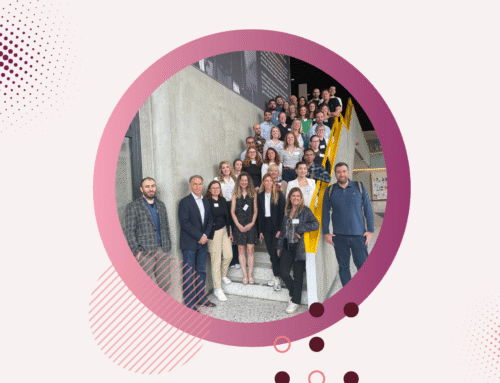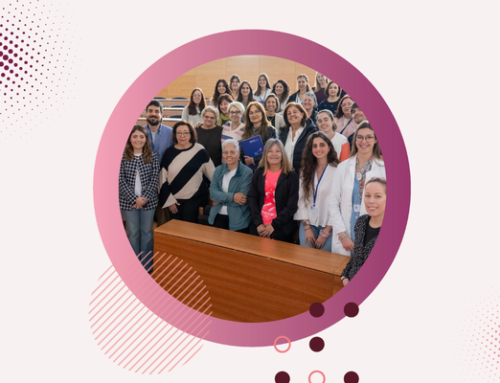
On October 20, the Lithuanian Cancer Patient Coalition (POLA) marked Breast Cancer Awareness Month with a roundtable discussion at the Lithuanian Parliament, organized together with Member of Parliament Saulius Čaplinskas. The event, titled “Breast Cancer Awareness Month: Personalized Approach, Innovative Solutions, Quality Life,” gathered a full room of participants – policymakers, healthcare leaders, clinicians, municipal representatives, public health specialists, and patient organizations.
Experts from the National Cancer Institute, Lithuanian University of Health Sciences (LSMU) Kaunas Clinics, Klaipėda University Hospital, and the Lithuanian Family Doctors’ Professional Union actively contributed to the discussion. The event featured three insightful presentations covering topics from diagnostics to palliative care, delivered by Dr. Rūta Briedienė, Dr. Agnė Čižauskaitė, and Greta Chlebopaševienė.
The discussion emphasized that early detection saves lives – up to 9 out of 10 women could be saved if breast cancer is diagnosed early. However, only about half of women eligible for screening actually attend. Speakers also stressed that personalized treatment, innovation, and strong patient involvement are key to recovery and quality of life.
Lifestyle interventions and holistic approaches were highlighted as essential parts of support for women at risk, patients, and those living beyond treatment. In this context, the MELIORA project – focusing on lifestyle interventions to improve health outcomes for women affected by breast cancer – was mentioned as an important European initiative. The Lithuanian University of Health Sciences (LSMU) team including Gintarė Kalinienė and Ričardas Radišauskas, also took part in the event.
POLA Director Neringa Čiakienė noted that such discussions in the Parliament provide a valuable opportunity to review the entire patient pathway – from prevention to rehabilitation and life after treatment — ensuring that every woman receives timely and comprehensive support.
The roundtable was part of POLA’s 2025 awareness campaign “After That”, aimed at increasing cancer awareness and reducing stigma.